 |
| Tea and Coffee Society (2009) |

ASK US ABOUT ANYTHING PERSIAN
Showing posts with label Documentaries. Show all posts
Showing posts with label Documentaries. Show all posts
Wednesday, 24 April 2013

Monday, 22 April 2013
Omar Khayyam - The Poet of Uncertainty (BBC)

Born Ghiyath al-Din Abul Fatah Umar Ibn Ibrahim al-Khayyam in 1044 in Nishapur, a Persian city, Omar Khayyam was a well-known mathematician, astronomer, philosopher, and poet. He spent most of his life in Persian intellectual centres such as Samarkand and Bukhara, and enjoyed the favour of the Seljuk sultans who ruled the region.
Khayyam's best-known scientific contributions were in algebra and astronomy. His classification of algebraic equations was fundamental to the advancement of algebra as a science, for example, just as his work on the theory of parallel lines was important in geometry. In astronomy, Khayyam's greatest legacy is a remarkably accurate solar calendar, which he developed when the Seljuk sultan, Malik-Shah Jalal al-Din, required a new schedule for revenue collection. Khayyam's calendar, called Al-Tarikh-al-Jalali after the sultan, was even more accurate than the Gregorian calendar presently used in most of the world: the Jalali calendar had an error of one day in 3770 years, while the Gregorian had an error of one day in 3330 years. Khayyam measured the length of one year as 365.24219858156 days, which is remarkably accurate. It has since been discovered that the number changes in the 6th decimal place over a person's lifetime. For comparison of Khayyam's accuracy, the length of one year at the end of the 19th century was 365.242196 days, and today it is 365.242190. Although the calendar project was cancelled upon Malik-Shah's death in 1092, the Jalali calendar has survived and is still used in parts of Iran and Afghanistan today.
Khayyam is also a well-known poet. This is the profession by which he is best-known in the West, often at the expense of his scientific achievements. His fame as a poet in the West has only existed since 1839, however, when Edward Fitzgerald published an English translation of Khayyam's Rubaiyat ("Quatrains"). It has since become a classic of world literature, and is largely responsible for influencing European ideas about Persian poetry and literature. Because he was known as a scientist in his own time, and his poetry did not surface until 200 years after his death, some doubt whether Khayyam indeed wrote the Rubaiyat. After careful analysis, however, most scholars now agree that he is the author, revealing a philosophical side to Khayyam that few of his contemporaries knew.
Khayyam's legacy remains largely in science, however, with his work in geometry so far ahead of its time that it was not used again until Descartes built upon Khayyam's theories in 17th century France.
Wednesday, 6 June 2012
Der Arzt Avicenna Ein Gelehrter aus Gondi Shapur (German)
 |
| Avicenna |
 |
| Anatomy of the skeleton, attributed to Avicenna, 980-1037 |
Friday, 6 April 2012
Cut people/Amir Naderi (doc., 2006) by Alberto Momo
 |
| Alberto Momo |
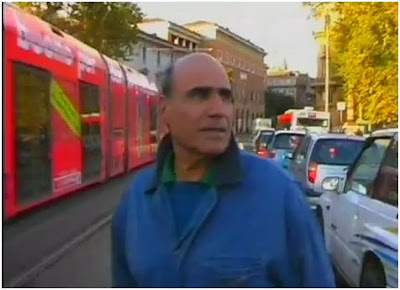
Amir Naderi (Persian: امیر نادری, born 15 August 1946 in Abadan) is a notable Iranian film director, screenwriter and one of the most influential figures of 20th-century Iranian cinema. Mr Naderi's latest feature film CUT starring Hidetoshi Nishijima and Takako Tokiwa was released in Japan in 2011 and in Korea in 2012.
Naderi developed his knowledge of cinema by watching films at the theater where he worked as a boy, reading film criticism, and making relationships with leading film critics. He began his career with still photography for some notable Iranian features. In the 1970s, Naderi turned to directing, and made some of the most important features of the New Iranian Cinema. In 1971, his directorial debut, Goodbye Friend was released in Iran. Mr. Naderi first came into the international spotlight with films that are now known as cinema classics, The Runner (1985), and Water, Wind, Dust (1989). The Runner is considered by many critics to be one of the most influential films of the past quarter century. After a number of his films were banned by the Iranian government, Mr. Naderi left the country. Expatriating to New York, Mr. Naderi continued to produce new work. He was named a Rockefeller Film and Video fellow in 1997, and has served as an artist in residence and instructor at Columbia University, the University of Las Vegas, and New York's School of Visual Arts. His U.S. films have premiered at the Film Society of Lincoln Center/MOMA's New Films New Director's series, the Venice, Cannes, Sundance and Tribeca Film Festivals. His U.S. feature, Sound Barrier (2005) won the prestigious Roberto Rossellini Prize at the Rome Film Festival. Naderi's latest feature film CUT was made in Japan in Japanese language and stars Hidetoshi Nishijima and Takako Tokiwa. The film laments the collapse of cinema through the gripping tale of a young filmmaker giving it all to make his next movie.
Amir Naderi continues to produce works of new generation of film directors such as Andrei Severny's Condition (2011), Naghmeh Shirkhan's Hamsayeh (2010) and Ry Russo-Young's Orphans (2007).
CUT PEOPLE : AMIR NADERI (1)
CUT PEOPLE : AMIR NADERI (2)
CUT PEOPLE : AMIR NADERI (3)
CUT PEOPLE : AMIR NADERI (4)
 |
Cut people/Amir Naderi (doc., 2006) by Alberto Momo |
Tuesday, 24 January 2012
Découverte du Monde: Ispahan (French)

Isfahan (Persian: اصفهان Esfahān), historically also rendered in English as Ispahan, Sepahan or Hispahan, is the capital of Isfahan Province in Iran, located about 340 km south of Tehran. It has a population of 1,583,609 and is Iran's third largest city after Tehran and Mashhad. The Isfahan metropolitan area had a population of 3,430,353 in the 2006 Census, the second most populous metropolitan area in Iran after Tehran.
The cities of Najafabad, Se-deh (Homayounshahr, renamed Khomeinishahr since 1981), Khan Isfahan, Shahin-shahr, Zarrinshahr, Mobarakeh, Falavarjan and Fouladshahr all constitute the metropolitan city of Isfahan.
Isfahan is located on the main north-south and east-west routes crossing Iran, and was once one of the largest cities in the world. It flourished from 1050 to 1722, particularly in the 16th century under the Safavid dynasty, when it became the capital of Persia for the second time in its history. Even today, the city retains much of its past glory. It is famous for its Islamic architecture, with many beautiful boulevards, covered bridges, palaces, mosques, and minarets. This led to the Persian proverb "'Esfahān nesf-e jahān ast" (Isfahan is half of the world).
The Naghsh-e Jahan Square in Isfahan is one of the largest city squares in the world and an outstanding example of Iranian and Islamic architecture. It has been designated by UNESCO as a World Heritage Site. The city also has a wide variety of historic monuments. (From Wikipedia)
Sunday, 20 November 2011
"Talking With A Shadow" by Khosrow Sinai (2005)
Talking With A Shadow is a movie about the renowned Iranian writer Sadegh Hedayat.
 |
| Sadegh Hedayat |
Sadegh (also spelled as Sadeq) Hedayat (in Persian: صادق هدایت; February 17, 1903, Tehran — 4 April 1951, Paris, France) was Iran's foremost modern writer of prose fiction and short stories.
Hedayat was born into a Iranian aristocratic family in Tehran and was educated at Collège Saint-Louis (French catholic school) and Dar ol-Fonoon (1914–1916). In 1925, he was among a selected few students who travelled to Europe to continue their studies. There, he initially went on to study engineering in Belgium, after a year he gave this up to study architecture in France. While there, he gave up architecture to pursue dentistry. In this period he became acquainted with Therese, a Parisian with whom he had a love affair. In 1927 Hedayat attempted suicide by throwing himself into the river Marne, however he was rescued by a fishing boat. After four years in France and Belgium, he finally surrendered his scholarship and returned home in the summer of 1930 without receiving a degree. In Iran he held various jobs for short periods.
Hedayat subsequently devoted his whole life to studying Western literature and to learning and investigating Iranian history and folklore. The works of Rainer Maria Rilke, Edgar Allan Poe, Franz Kafka, Anton Chekhov and Guy de Maupassant intrigued him the most. During his short literary life span, Hedayat published a substantial number of short stories and novelettes, two historical dramas, a play, a travelogue, and a collection of satirical parodies and sketches. His writings also include numerous literary criticisms, studies in Persian folklore, and many translations from Middle Persian and French. He is credited with having brought Persian language and literature into the mainstream of international contemporary writing. There is no doubt that Hedayat was the most modern of all modern writers in Iran. Yet, for Hedayat, modernity was not just a question of scientific rationality or a pure imitation of European values.
In his later years, feeling the socio-political problems of the time, Hedayat started attacking the two major causes of Iran's decimation, the monarchy and the clergy, and through his stories he tried to impute the deafness and blindness of the nation to the abuses of these two major powers. Feeling alienated by everyone around him, especially by his peers, Hedayat's last published work, The Message of Kafka, bespeaks melancholy, desperation and a sense of doom experienced only by those subjected to discrimination and repression.
Hedayat travelled and stayed in India from 1937 until 1939. In Bombay he completed and published his most enduring work, The Blind Owl, whose writing he started as early as 1930 in Paris. The book was praised by many including Henry Miller and André Breton. It has been called "one of the most important literary works in the Persian language".
At the end of 1950, Hedayat left Iran for Paris. There, on 4 April 1951, he committed suicide by gassing himself in a small rented apartment on 37 Rue Championnet. He had plugged all the gaps in the windows and door with cotton and, so it wouldn’t burden anyone, he had placed the money (a hundred thousand francs) for his shroud and burial in his side wallet in plain view. He was buried at the division 85 of Père Lachaise cemetery. His funeral was attended by a number of intimate friends and close acquaintances, both Iranian and Frenchmen.(From Wikipedia)
 |
| Khosrow Sinai |
Khosrow Sinai (Persian: خسرو سینایی , born 19 January 1941 in Sari, Iran) is an Iranian film director. His works are usually based on social documentations. He was the first Iranian film director to win an international prize after the Islamic revolution in Iran.He is also known as an Iranian scholar and has been awarded the prestigious 'Knights Cross of the Order of Merit of the Polish Republic'. (From Wikipedia)
Monday, 26 September 2011
"Iran and Britain" by Christopher de Bellaigue (BBC)
 |
| Christopher de Bellaigue |
Documentary in which writer and journalist Christopher de Bellaigue explores the fraught but often surprisingly intimate history of Britain's relations with Iran, and asks why Iranians think that if something goes wrong in Iran then Britain must have something to do with it.
De Bellaigue has lived in Tehran, speaks fluent Persian and knows well the phenomenon of 'Uncle Napoleonism', the notion that the cunning British are 'out to get you' that has been a common attitude in Iranian society for 100 years.
He looks at some key events in the relationship, notably Britain's role in the overthrow of several Iranian governments, its control of Iran's oil and the on-off support for Iran's democrats.
Meeting prominent Iranians, including Uncle Napoleon's inventor and others with direct knowledge of these events, he examines the foundations and justification for these Iranian suspicions and asks if they are still there after 30 years of isolation. (From BBC)
Friday, 16 September 2011
"The Flamingos Return to Rezaieh" by Mutual of Omaha's Wild Kingdom
 |
| The Flamingos Return to Rezaieh by Mutual of Omaha's Wild Kingdom |
Wild Kingdom, sometimes known as Mutual of Omaha's Wild Kingdom, is an American television show that features wildlife and nature. It was originally produced from 1963 until 1988, and was revived in 2002. The show's second incarnation currently airs on Animal Planet in the U.S. This video is an episode of the show about Lake Urmia's Flamingos in Rezaieh (Oromieh or Urmia).
Lake Urmia (Azerbaijani: Urmu Gölü , Urmia Gölü ; Persian: دریاچه ارومیه Daryâcheh-ye Orumiyeh (or Oroumieh), ancient name: Lake Matiene) is a salt lake in northwestern Iran, near Iran's border with Turkey. The lake is between the Iranian provinces of East Azerbaijan and West Azerbaijan, west of the southern portion of the similarly shaped Caspian Sea. It is the largest lake in the Middle East, and the third largest salt water lake on earth, with a surface area of approximately 5,200 km² (2,000 mile²), 140 km (87 miles) length, 55 km (34 miles) width, and 16 m (52 ft) depth. (From Wikipedia)
Saturday, 3 September 2011
"Tehran is the Capital of Iran" by Kamran Shirdel 1966 - 1980
 |
| Kamran Shirdel |
Kamran Shirdel (born 1939 in Tehran) is a renowned Iranian documentarist. He studied architecture and urbanism at the University of Rome and film direction at the Centro Sperimentale di Cinematografia of Rome, graduating in 1964. He worked as an assistant director with John Huston on The Bible before making his diploma film, Gli Specchi (The Mirrors), in Rome. He returned to Iran and started his career in 1965. He is also the managing director of Filmgrafic Co. Kamran Shirdel was appointed as IL CAVALIERE Della Republica Italiana and received the Medals of LA STELLA DELLA SOLIDARIETA' ITALIANA in a ceremony held in Farmanieh Palace in Tehran on May 2010. (From Wikipedia)
Tehran Is the Capital of Iran (1966-79) documents life in a deprived district in the south of Tehran. The images of destitution in Tehran's poor areas is accompanied by a variety of spoken accounts: the official viewpoint on the district's living conditions, what the inhabitants have to say, and occasional extracts read out of school manuals. The key element in Shirdel's film is the counterpoint effect he creates with image and sound. His impressively powerful portrayal of social unease helps reinforce the impact of his astonishing documentary images and social themes.
Thursday, 7 July 2011
Tehran Today (1977) by Khosrow Sinai
 |
| Khosrow Sinai |
Khosrow Sinai (Persian: خسرو سینایی , born 19 January 1941 in Sari, Iran) is an Iranian film director. His works are usually based on social documentations. He was the first Iranian film director to win an international prize after the Islamic revolution in Iran. He is also known as an Iranian scholar and has been awarded the prestigious 'Knights Cross of the Order of Merit of the Polish Republic'.
 |
| A picture of University of Tehran around the time Sinai's film was made |
Forgotten Iran (1971) – a film by Claude Lelouch
 |
| French Director Claude Lelouch |
Claude Pinoteau and Claude Lelouch shot their documentary just after the Persepolis Celebrations in 1971. They decided to address the urban transformations and cultural emancipation that the country was subject to by the early seventies. (From Wikipedia)
Monday, 4 July 2011
Welcome to Tehran - a journey by Rageh Omaar
 |
| Rageh Omaar |
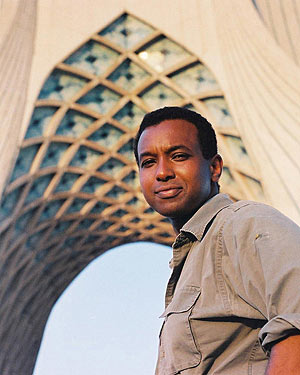
Welcome to Tehran (1 x 90 min) is an observational documentary that sets out to look at the region and its people not through politicians, officials and analysts but through the eyes of ordinary Iranians.
Omaar has visited Tehran - the region's capital - once before as a news reporter, filming the incendiary demonstrations and recording the uncompromising statements from officials since the aftermath of the Islamic Revolution of 1979.
But his experiences of being in the city never left him.
He says: "There is an energy and vitality to the place that is completely different from the usual images we in the West have of it. And that's why I wanted to return."
In making the film, Omaar tried to see Iran from the inside by visiting people's homes and travelling through a rich variety of neighbourhoods and districts of the city.
Omaar and Producer/Director Paul Sapin struggled for a year to get the right kind of access which gave them the freedom to fully explore these rarely filmed areas.
The film is told as a journey through Tehran but also as a very personal essay by Omaar as he digs deeper into this complex and fascinating society.
Omaar's journey takes him under the skin of the city and he meets with local people who share with him their personal stories and feelings about the current state of affairs in Iran.
There are stories of taxi drivers; wrestlers; business women; people working with drug addicts and the country's leading pop star and his manager - the Simon Cowell of Iran - who drove Omaar around Tehran in his Mercedes-Benz.
Paul Sapin says: "Iran has become a closed society to the West and it is a real challenge to produce a genuine documentary in this region due to problems with access for Western journalists, but wherever we went, we were met with warmth and hospitality.
"Iran is not the austere, humourless place we're led to believe and that was certainly Rageh's experience." (From BBC)
Wednesday, 22 June 2011
The Queen and I by Nahid Persson Sarvestani, 2008 (Swedish)

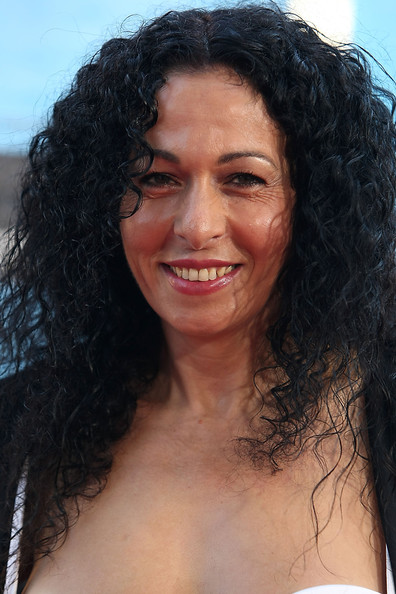
Nahid Persson Sarvestani (born 1960 in Shiraz, Iran) is an award-winning Iranian-Swedish filmmaker and director.
Her most famous documentary films are Prostitution Behind the Veil, My Mother - A Persian Princess, The End of Exile, and The Last Days of Life.
In November 2008, Persson Sarvestani finished the production of The Queen and I, a 90-minute documentary in which the director's year-long, complex relationship with the Iranian former Empress Farah Pahlavi is examined. The film had its North American premiere at Sundance Film Festival in 2009.
Persson Sarvestani has received several awards for her films. The Last Days of Life received the Swedish Cancer Foundation's (Cancerfondens) Journalist Prize in 2002. The film Prostitution Behind The Veil received an International Emmy nomination, as well as the Golden Dragon at the Krakow Film Festival, Best International News Documentary at the TV-festival 2005 in Monte Carlo, as well as The Crystal Award (Kristallen) by SVT (Swedish State Television) and the Golden Scarab (Guldbaggen) by the Swedish Film Institute in 2005.
Persson Sarvestani also shares TCO's (Tjänstemännens Centralorganisation) 2005 Cultural Prize with the author Marjaneh Bakhtiari. (From Wikipedia)
 |
| Swedish-Iranian film director Nahid Persson Sarvestani |
Farah Pahlavi (Farah Diba; Persian: فرح دیبا Faraḥ Dība) born 14 October 1938, Tehran, Farah is the former Queen and Empress of Iran. She is the widow of Mohammad Reza Pahlavi, the Shah of Iran, and only Empress (Shahbanu) of modern Iran. She was Queen consort of Iran from 1959 until 1967 and Empress consort from 1967 until exile in 1979. ((From Wikipedia)
 |
| Empress Farah Pahlavi |
Monday, 23 May 2011
Rick Steves' IRAN

Richard "Rick" Steves (born May 10, 1955, Edmonds, Washington) is an American author, historian, and television personality focusing on European travel. He is the host of the public television series Rick Steves' Europe, has a public radio travel show, Travel with Rick Steves, and has authored various location-specific travel guides. (From Wikipedia)
Sunday, 15 May 2011
Terry Jones' Barbarians; "The Brainy Barbarians"

Terry Jones' Barbarians is a 4-part TV documentary series first broadcast on BBC 2 in 2006. It was written and presented by Terry Jones, and it challenges the received Roman and Roman Catholic notion of the barbarian. Professor Barry Cunliffe of the University of Oxford acted as consultant for the series.
In the third episode "The Brainy Barbarians", Jones argues that the ancient Greeks and Persians were in reality far from the Roman view of them as effeminate and addicted to luxury. The Greeks valued science and mathematics, while the Persians had initially allowed multiculturalism among the different ethnic groups of its empire. (From Wikipedia)
 |
| Naghshe Rostam: Shapur I |
Friday, 6 May 2011
Saturday, 30 April 2011
"Al-Ghazali: The Alchemist of Happiness" by Ovidio Salazar

ḠAZĀLĪ, ABŪ ḤĀMED MOḤAMMAD, b. Moḥammad Ṭūsī (450-505/1058-1111), one of the greatest systematic Persian thinkers of medieval Islam and a prolific Sunni author on the religious sciences (Islamic law, philosophy, theology, and mysticism) in Saljuq times.
Sunday, 24 April 2011
Thursday, 21 April 2011
Jiroft BBC Channel 4
 |
| The "Scorpion-man" board game of 16 playing spaces excavated at Jiroft, Iran. |
A "Jiroft culture" has been postulated as an early Bronze Age (late 3rd millennium BC) archaeological culture, located in what is now Iran's Sistan and Kermān Provinces. The hypothesis is based on a collection of artifacts that were confiscated in Iran and accepted by many to have derived from the Jiroft area in south central Iran, reported by online Iranian news services, beginning in 2001.
The proposed type site is Konar Sandal, near Jiroft in the Halil River area. Other significant sites associated with the culture include; Shahr-e Sukhteh (Burnt City), Tepe Bampur, Espiedej, Shahdad, Iblis, and Tepe Yahya.
The proposition of grouping these sites as an "independent Bronze Age civilization with its own architecture and language", intermediate between Elam to the west and the Indus Valley Civilization to the east, is due to Yousef Majidzadeh, head of the archaeological excavation team in Jiroft. Yousef Majidzadeh speculates they may be the remains of the lost Aratta Kingdom. Yousef Majidzadeh's conclusions have met with skepticism from some reviewers. Other conjectures (e.g. Daniel T. Potts, Piotr Steinkeller) have connected the Konar Sandal with the obscure city-state of Marhashi, that apparently lay to the east of Elam proper. (from Wikipedia)
Subscribe to:
Posts (Atom)