Showing posts with label Iranian Directors. Show all posts

Sunday, 14 April 2013

Understanding Persian Culture through Film


The Iranian Crystal Phoenix Award

Tehran-based film critic, festival organizer and director of Iranian Independents, Mohammad Atebbai joins a panel of scholars including Dr. Kaveh Ehsani, editor and Assistant Professor of International Studies, DePaul University, Chicago; Dr. Wimal Dissanayake, Professor of Intercultural Studies, University of Hawaii at Manoa, East West Center; Dr. Norma Claire Moruzzi, Associate Professor of Political Science (Gender and Women's Studies) and Director, International Studies Program, University of Illinois, Chicago; and Alissa Simon, film reviewer for VARIETY and senior film programmer for the Palm Springs International Film Festival. Topics of discussion include Iranian Film History, Contemporary Iranian Urban Society, Culturally Specific and Universal Experiences, and Women in Film and Society.

Generously co-sponsored by the Roshan Cultural Heritage Institute, AsiaPacificFilms, and NETPAC/USA


Monday, 30 April 2012

HICH (2009) by Abdolreza Kahani

Abdolreza Kahani


Like Oscar-winning Ashgar Farhadi, Abdolreza Kahani is a director of the new cinematic movement in Iran whose members, in contrast with the older generation of Iranian film makers, focus on urban life in Iran. HICH is a successful example of Kahani's craftsmanship and mastery of narrative-writing, characterization, and realistic depiction. 


Thursday, 15 December 2011

Asghar Farhadi: "A Separation" (2011)


A Separation (Persian: جدایی نادر از سیمین, translit. Jodái-e Náder az Simin) is a 2011 Iranian drama film written and directed by Asghar Farhadi, starring Leila Hatami, Peyman Moaadi, Shahab Hosseini, Sareh Bayat and Sarina Farhadi. It focuses on an Iranian middle-class couple who separate, and the intrigues which follow when the husband hires a lower-class caretaker for his elderly father. The film received the Golden Bear for Best Film and the Silver Bears for Best Actress and Best Actor at the 61st Berlin International Film Festival, becoming the first Iranian film to win the Golden Bear.The film is the official Iranian candidate for the Best Foreign Language Film at the Academy Awards. (From Wikipedia)


Asghar Farhadi
  

Asghar Farhadi is a graduate of Theatre, with a BA in Dramatic Arts and MA in Stage Direction from Tehran University and Tarbiat Modarres University. Farhadi made short 8mm and 16mm films in Isfahan branch of Iranian Young Cinema Society before moving on to writing plays and screenplays for IRIB. He also directed such TV series as the popular A Tale of a City and co-wrote the screenplay of Ebrahim Hatamikia’s Low Heights. Dancing in the Dust was his feature film debut, which he followed with the critically acclaimed A Beautiful City.

His third film, Fireworks Wednesday won the Gold Hugo at the 2006 Chicago International Film Festival. His fourth film, About Elly won the Silver Bear for Best Director at 59th International Berlin Film Festival as well as Best Picture at Tribeca Film Festival. It is about a group of Iranians who take a trip to the Caspian Sea that turns tragic. Famous film theorist and film critic David Bordwell has called About Elly a masterpiece.

His latest film Nader and Simin, A Separation premiered on 9 February 2011 at the 29th Fajr International Film Festival in Tehran and received rave reviews from Iran Society of Film Critics. It won Farhadi four awards including Best Director (for the third time after Fireworks Wednesday and About Elly). On 15 February it also played in competition at the 61st Berlin International Film Festival which finally earned him Golden Bear for best film becoming the first Iranian film to win the Golden Bear. In June 2011, A Separation won the Sydney Film Prize in competition with Cannes Festival's winner The Tree of Life directed by Terrence Malick . (From Wikipedia)

"A Separation" could hardly be more concrete, or contemporary, or dramatic.
Joe Morgenstern
Wall Street Journa

Farhadi demonstrates a Hitchcockian flair for suspense, while his cast deliver faultless performances.
Lewis Porteous
Skinny
 
One of the year's best foreign films, A Separation goes beyond its particular Iranian tale of a marital dissolution, contesting along the way gender, cultural, and religious values and taboos.  
Emanuel Levy
EmanuelLevy.Com

A light yet powerful Islamic family drama that refuses to cave in to stereotypes.

Ron Wilkinson
Monsters and Critics

A solid Iranian Oscar-entry that puts women in the forefront in a battle of wills that happily posits more questions than answers.
Harvey S. Karten
Compuserve

It resonates deeply thanks to its universality, which it miraculously achieves without ever once selling out the social mores of its location. Profoundly affecting, wonderfully performed and endlessly surprising.

Simon Miraudo
Quickflix 

A masterpiece of intimate, dramatic filmmaking.
Tom Clift
Cut Print Review

The iniquities of contemporary Iran are essayed in this absorbing, award-winning marital drama about the ways in which tiny events can have cataclysmic consequences.
Alistair Harkness
Scotsman

A stunning piece of work, beautifully telling a raw human story with expert writing, direction, photography, editing and acting. 

Rich Cline
Shadows on the Wall
 
A Separation twists and turns, layering on crucial details and moral quandaries in each scene, never for a moment allowing us the luxury of identifying too easily with any single character.
Sukhdev Sandhu
Daily Telegraph
 
You won't see a more absorbing film all year.
David Edwards
Daily Mirror [UK]  (From Rotten Tomatoes)


Thursday, 8 December 2011

"First Case, Second Case (1979)" by Abbas Kiarostami

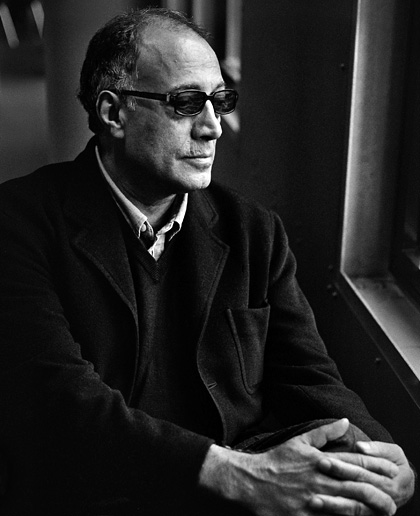
Abbas Kiarostami


Open case: Kiarostami's film reemerges after 30 years
by MEHRZAD BAKHTIAR (Tehran Bureau)

In the magnificent haste and enthusiasm of Iranians to share insight about the questionable presidential election in June, a number of significant cultural artifacts, either forgotten or previously unheard of, have been brought to light. One such gem is Abbas Kiarostami's Ghazieh Shekle Aval Shekle Dovom or First Case, Second Case.

Kiarostami is a canonized filmmaker both inside and outside of Iran, yet this highly important work managed to remain under the radar of even most cinema enthusiasts until just a few months ago when it appeared online. Free and widely available, it affords us the opportunity to examine Kiarostami's astute social observations through the lens of recent history.

The 47-minute documentary begins by depicting a scenario: a teacher drawing a diagram on the chalkboard with his back to the class is interrupted several times by the sound of a pen banging rhythmically against a desk. Each time he turns around, the noise stops, only to resume again. Finally, unable to pick out the culprit, the teacher tells the seven boys sitting in the corner of the room to leave the class. The students are given an ultimatum, which becomes the basis of the film: either (case one) they inform the teacher who was causing the disturbance, or (case two), they will all be suspended for a week. Kiarostami then goes on to interview the fathers of the students, as well as ministers, religious leaders, writers, filmmakers and directors of educational institutions about their opinions as to the proper course of action.

The initial appeal of the film lies in the presentation of this very dilemma. Rather than take a moral stance on the issue, Kiarostami depicts each case with a sense of removed neutrality. We are encouraged to weigh two deadlocked positions against each other; each has its advantages and disadvantages, and there is no nuanced third way out. Those viewers who are unable to reduce their vales into a cut-and-dry answer will likely agree with writer and filmmaker, Noureddin Zarrinkelk, that "a clear answer is really very difficult to come up with."

After this first response, the film cuts to a head-on shot of a working projector, invoking in the viewer the feeling that the film of the students in the class is being projected onto their person, that he or she is in fact one of the children faced with this moral decision.

As the film continues, however, we see that few of the interviewees are as torn or impartial as Zarrinkelk. Having been shot in 1979-80 and released in 1980, only a year after the Islamic revolution, most answers are impassioned and highly politicized. The question is not merely one of a student disrupting a class and a teacher doling out whatever punishment he deems fit. Whether or not the analogy is explicitly made, most of the people interviewed see the scenario as a greater issue of solidarity versus selling out, of standing one's ground against an abuse of power, versus giving into, and hence supporting that power.

In addition to still-popular celebrities like Iranian actor Ezzatolah Entezami and filmmaker Masoud Kimiai, First Case, Second Case includes a cast of important political figures: Ebrahim Yazdi, for example, was an active member of the National Resistance Movement as well as the Freedom Movement of Iran. He became Foreign Minister after the revolution, only to step down in less than a year in opposition to the hostage crisis. Sadegh Ghotbzadeh, then director of the Islamic Republic's Radio and Television Network, would replace Yazdi, only to be executed in less than a year for allegedly plotting to assassinate Khomeini. Other figures include Kamal Kharazi, who would become Minister of Foreign Affairs during the Khatami administration, and Ayatollah Sadegh Khalkhali, the notorious Revolutionary Court magistrate who sentenced a great number of former government officials to execution.

The obvious, retrospective irony, of course -- the element that makes this film even more compelling now than when it was made -- is the sight of so many important figures supporting a revolution that would come to embody a totalitarian government, itself completely intolerant of the very same rebellion and resistance they promote in their films.

Whether or not Kiarostami could foresee what this film would come to mean is ultimately irrelevant. Either way, he was able to put his finger on an issue that beautifully captured the fervent dynamics of a historical moment. What resulted was a film from which, thirty years later, every Iranian can still learn. (From Tehran Bureau)


Sunday, 4 December 2011

"Tranquility in the Presence of Others (1973)" by Nasser Taghvai


Nasser Taghvai

Nāsser Taghvāí (also spelt Nāser Taghvāee, Persian: ناصر تقوایی , born 1941) is an Iranian film director and screenwriter.

Born in Abadan, Iran, he graduated from the Faculty of Literature in Tehran University. After early experiences as a storywriter, he began filming documentaries in 1967. He made his debut, Tranquility in the Presence of Others, in 1970 and gained the attention of Iranian critics. His concern for the ethnography and atmosphere of southern Iran is notable in his films.

Most of his works have been based on novels. Captain Khorshid is an adaptation of Ernest Hemingway's To Have and Have Not, which won the third prize at the 48th Locarno International Film Festival in Switzerland in 1988.

In 1999 he directed a segment of the film Tales of Kish, which was nominated for the Palme d'Or at the Cannes Film Festival.


Saturday, 3 December 2011

"My Tehran for Sale" by Granaz Moussavi


Granaz Moussavi

Granaz Moussavi (Persian : گراناز موسوی ), (born January 26, 1974 in Tehran) is an Iranian-Australian contemporary poet, film director and screen writer. She is primarily renowned for her avant-garde poetry in the 90's. Her award winning debut feature film My Tehran for Sale is an internationally acclaimed Australian-Iranian co-production. (From Wikipedia)


My Tehran for Sale (Persian :تهران من، حراج), is an internationally acclaimed 2009 Australian-Iranian feature film written and directed by avant-garde poet turned filmmaker Granaz Moussavi, produced by Cyanfilms and starring Marzieh Vafamehr, Amir Chegini and Asha Mehrabi.

Officially selected by Toronto, Rotterdam, Pusan and several other international film festivals, this debut art-house, explores the contemporary Tehran and its underground art scene focusing on the life of a young actress who has been banned from her theater work. Struggling to pursue her passion in art as well as her secret life-style in a socially oppressed environment, Marzieh gets involved in some subsequent and unexpected events leading her to a decision-making dilemma regarding her survival and identity.

Unlike already acclaimed Iranian exotic cinema which is mostly known in the West by its portrayal of rural life, nature landscapes, as well as socio-economically deprived children struggling for survival in the outskirts of Tehran, the writer/director of My Tehran for Sale attempts to depict the middle class people and the uncertainties in their every day urban life. My Tehran for Sale has a poetic language to address critical issues such as double life of young people, women oppression, HIV issue, secret abortions, underground art, massive immigration, crisis of identity, people smuggling and also asylum seeker detention centers.

My Tehran For Sale is the winner of Independent spirit Inside Film Awards 2009. It won the jury award for best feature Film at the TriMedia Film Festival in 2010. Apart from various festivals and universities the film was screened at Museum of Modern Art MoMA in New York as well as Cinémathèque Française in Paris.

The film has been an official selection to Toronto International Film Festival TIFF (Sep 2009), Vancouver International Film Festival (Sep-Oct 2009), Busan International Film Festival BIFF(formerly PIFF) (Oct 2009), International Filmfestival Mannheim-Heidelberg (Nov 2009), Museum of Modern Art MoMA (New York, Jan 2010), International Film Festival Rotterdam (Jan 2010), International Film Festival Prague - Febiofest, 2010 Cinema Novo Film Festival Brugges 2010, CPH:PIX Copenhagen International Film Festival 2010, Guadalajara International Film Festival Mexico, Sydney Travelling Film Festival, Las Palmas de Gran Canaria International Film Festival, Human Rights Arts and Film Festival HRAFF 2010, Focus on Asia Fukuoka International Film Festival 2010 , Global Lens USA 2010, Dialogue of Cultures Film Festival New York 2011 and SVAW Film Fesival Melbourne 2011, etc. (From Wikipedia)


Wednesday, 30 November 2011

Amir Naderi's "CUT" Press Conference

Amir Naderi

Amir Naderi (Persian: امیر نادری, born 15 August, 1946 in Abadan) is a notable Iranian film director, screenwriter and one of the most influential figures of 20th-century Persian cinema. Naderi developed his knowledge of cinema by watching films at the theater where he worked as a boy, reading film criticism, and making relationships with leading film critics. He began his career with still photography for some notable Iranian features. In the 1970s, Naderi turned to directing, and made some of the most important features of the New Iranian Cinema. In 1971, his directorial debut, Goodbye Friend was released in Iran. Mr. Naderi first came into the international spotlight with films that are now known as cinema classics, The Runner (1985), and Water, Wind, Dust (1989). The Runner is considered by many critics to be one of the most influential films of the past quarter century. After a number of his films were banned by the Iranian government, Mr. Naderi left the country. Expatriating to New York, Mr. Naderi continued to produce new work. He was named a Rockefeller Film and Video fellow in 1997, and has served as an artist in residence and instructor at Columbia University, the University of Las Vegas, and New York's School of Visual Arts. His U.S. films have premiered at the Film Society of Lincoln Center/MOMA's New Films New Director's series, the Venice, Cannes, Sundance and Tribeca Film Festivals. His last feature, Sound Barrier (2005) won the prestigious Roberto Rossellini Prize at the Rome Film Festival. Mr Naderi should come back in great shape in 2011 with CUT. Starring Hidetoshi Nishijima and Takako Tokiwa, CUT laments the collapse of Japanese cinema through the gripping tale of a young filmmaker giving it all to make his next movie.

Due to smaller distribution and advertising budgets, Mr. Naderi's films are not as well known as most Hollywood films. Despite that and the lack of recognizable actors in most of his films, his work tends to find distribution (mainly in Europe and Japan), and he has earned a great deal of critical acclaim. Mr. Naderi’s films and photography are also frequently the subject of retrospectives at major festivals and museums throughout the world. Lincoln Center in New York, the city that has been his home for the past 20 years, offered a complete retrospective of his work in 2001, as did the International Museum of Cinema in Turin, Italy in 2006. The most recent retrospective of his work was screened at the Pusan International Film Festival, the largest in Asia. Mr. Naderi has served as a jury member of international film festivals for over a decade. (From Wikipedia)


Influential Iranian filmmaker Amir Naderi’s internationally funded, Tokyo-set produc­tion is not your average slice-of-life tale. Fiercely unconventional, Cut stole Naderi away from his (semi-)native New York and planted him in the middle of a unique fund­ing scheme. The aptly named Tokyo Story, a production outfit consisting of two bank­ers with a lot of bright ideas, found a way to dodge big-industry bucks, keeping Cut independent and one hundred per cent real. Besides, what big studio would dare make a film about the end of cinema?

Using stark black-and-white imagery and a raw, digital aesthetic, Cut tells the story of Shuji (Hidetoshi Nishijima), an unknown filmmaker who craves great cinema like a junkie dying for a fix. The only problem, he figures, is that great films are dead — unless he can find a way to make them himself. Shuji seeks solace on rooftops or in grave­yards, where he preaches the gospel of the old film classics with the manic energy of a television evangelist to whoever will listen. The only thing that regularly quells his mania is the sound of his 16mm projec­tor playing the works of Kurosawa, Ozu or Mizoguchi at the weekly screenings he hosts above his apartment. That is, until two thugs suddenly appear and drag him away.

Much like his leading man, Naderi received his cinematic education by devour­ing golden oldies and forming relationships with notable film critics who later prompted him to become part of the New Iranian Cinema and benefit from its increasing international reach. However, unlike Naderi, Shuji only ever manages to make a few forgettable films that almost no one sees. These films are financed exclusively by his obliging brother, who borrows money from the yakuza. When the gang demands their debt be cleared, Shuji puts his love for mov­ies to the test, offering to work as a human punching bag. It’s a role that could easily cost him his life — or maybe, just maybe, earn him enough self-respect to make another movie. A great one. (From tiff.)


Wednesday, 17 August 2011

The Brick & the Mirror by Ebrahim Golestan (1965)


Ebrahim Golestan


A pioneer in filmmaking and literature, Ebrahim Golestan has influenced generations of Iranians in various fields of art for more than half a century. Golestan published his first collection of short stories entitled, "Azar, the Last Month of autumn" in 1948.

Golestan began journalism as a writer, then editor, early in the 40’s, and photography as a freelancer with news organizations in 1951. Later he produced several landmark documentaries and feature films such as "A Fire" (1961), "Wave, Coral, Rock" (1959/1962), and "Marlik Hills" (1963). His first narrative film “The Mudbrick and the Mirror” (1963/4) is considered by many historians as the first of the social realism wave in Iranian cinema. At the same time, he continued to write and publish his work in fiction. “Hunting the Shadow” (1955), “The Brook, the Wall, and the Thirsty One” (1967), “Tide & Fog” (1969) and “Secrets of the Treasures at the Ghost Valley (Asarare Ganje Darehye Jenni)” (1971/3), “The Cock” (1974) are examples of his published works of fiction; and “The Words Spoken” (1995), a selection of his lectures, literary criticism and interviews, and some narrations for films.

Golestan has made valuable contributions as a translator of great works of literature such as “The Adventures of Huckleberry Finn” and several of Hemingway's stories.

Golestan’s feature film, “Secrets of the Treasures at the Ghost Valley”, was banned before and after the 1979 revolution. The film presents an insightful, thought provoking account of dynamics of various social strata of Iranian society at a historical juncture, best described by the director as “the twisted image of a twisted situation”. Tirgan 2011 is proud to present this influential and rarely seen masterpiece of Iranian cinema. (From Tirgan)


The Brick & the Mirror


Thursday, 7 July 2011

Tehran Today (1977) by Khosrow Sinai


Khosrow Sinai


Khosrow Sinai (Persian: خسرو سینایی , born 19 January 1941 in Sari, Iran) is an Iranian film director. His works are usually based on social documentations. He was the first Iranian film director to win an international prize after the Islamic revolution in Iran. He is also known as an Iranian scholar and has been awarded the prestigious 'Knights Cross of the Order of Merit of the Polish Republic'.


A picture of University of Tehran around the time Sinai's film was made

Sunday, 12 June 2011

Abolfazl Jalili Talks about His "A True Story" (French subtitles)


Abolfazl Jalili


Abolfazl Jalili (Persian: ابوالفضل جلیلی , born 1957 in Saveh, Iran) is an internationally acclaimed Iranian (Persian) film director. He belongs to Iranian new wave movement. Jalili studied directing at the Iranian College of Dramatic Arts, then worked for national television (IRIB) where he produced several children's films. His 'Det' Means Girl (1994) won prizes in Venice film festival and Nantes. He was one of Rotterdam's Film Makers in Focus in 1999.


Monday, 25 April 2011

Abbas Kiarostami Talks About His Cinema

Abbas Kiarostami (Persian: عباس کیارستمی Abbās Kiyārostamī; born 22 June 1940) is an internationally acclaimed Iranian film director, screenwriter, photographer and film producer. An active filmmaker since 1970, Kiarostami has been involved in over forty films, including shorts and documentaries. Kiarostami attained critical acclaim for directing the Koker Trilogy (1987–94), Taste of Cherry (1997), and The Wind Will Carry Us (1999).


Friday, 22 April 2011

Dariush Mehrjui Talks about "The Cow"

The fim's poster

Iranian New Wave refers to a new movement in Iranian cinema. It started in 1969 after the release of The Cow directed by Darius Mehrjui. It was followed by Masoud Kimiai's Qeysar, and Nasser Taqvai's Calm in Front of Others. They set off a trend that was cultural, dynamic and intellectual. The Iranian viewer became discriminating, encouraging the new trend to prosper and develop. In 3-4 years, 40-50 noteworthy films were made, establishing the New Wave of Iranian cinema.

Dariush Mehrju'i (Persian: داریوش مهرجویی , born 8 December 1939 in Tehran) is an Iranian director, screenwriter, producer, and film editor. As an Iranian New Wave cinema icon, Mehrjui is regarded to be one of the intellectual directors of Iranian cinema. Most of his films are inspired by literature and adopted based on Iranian and foreign novels and plays.

The Cow (Persian: گاو, Gāv) is a 1969 Iranian movie directed by Dariush Mehrjui, written by Gholam-Hossein Saedi based on his own play and novel, and starring Ezatolah Entezami as Masht Hasan. Some believe that "New Wave" of Persian cinema emerged after this film.
The story begins by showcasing the close relationship between a middle-aged Iranian villager Masht Hasan and his beloved cow. Hassan is married but has no child. His only valuable property is a cow that he cherishes - the only cow in the village.

When Hasan must leave the village for a short time, the pregnant cow is found dead in the barn. Hasan's fellow villagers fear his reaction and cover up the evidence of the death and tell him upon his return that his cow has run away. Finding great difficulty confronting the loss of his beloved cow, as well the loss of livestock that affects his social stature at the village, Hasan gradually goes insane following a nervous breakdown and believes he is the cow, adopting such mannerisms as eating hay. His wife & the villagers try their best to bring him back to the normal life but all in vain. The tragedy ends with Hasan's death. (From Wikipedia)


Thursday, 21 April 2011

Nasseroddin Shah Actor-e Cinema or Once Upon a Time, Cinema (1932) by Mohsen Makhmalbaf


Set in the Qajar era, the film follows the character known as the cinematographer (Mehdi Hashemi) as he shows films to the Shah (Ezzatolah Entezami). The film shows clips from older Iranian films from the silent age onwards. The Shah falls in love with an old film character, Golnaar (Fatemeh Motamed-Aria). After she leaves the movie, she appears in and enters the "real" world. (From Wikipedia)


Mohsen Makhmalbaf