Showing posts with label Visual Arts. Show all posts

Wednesday, 17 April 2013

Azadeh Akhlaghi; By An Eye-Witness

Azadeh Akhlaghi 

Born in 1978, in Shiraz Azadeh Akhlaghi studied computer science at RMIT University. She is a conceptual artist who began her career in 2001. Akhlaghi’s main concerns are photography, video-arts and short movies. Akhlaghi’s practice acknowledges conceptual approaches to contemporary art through photography. She has made a number of short films which have been screened in numerous film festivals such as the Berkeley Art Museum, Pusan and Oslo. From 2001 to 2010 Akhlaghi has participated in numerous art exhibitions ranging from such countries as Iran, Australia, England to Turkey. Akhlaghi has also won a number of international prizes including the third prize of the UN Habitat Photography Competition and the first prize of the Women and Urban Life Competition of Iran. (From Galley MAMAK)

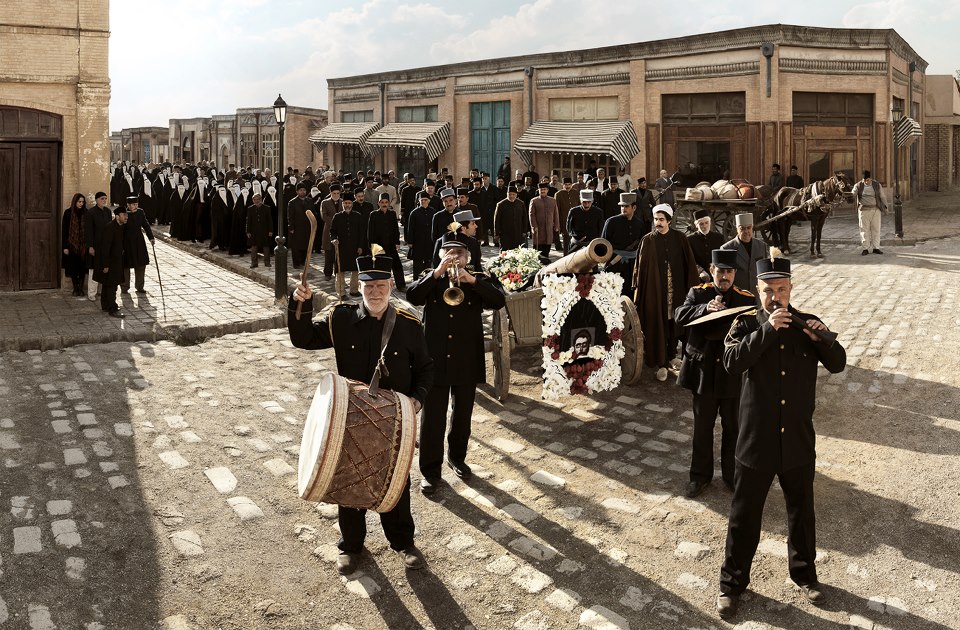
In her project By An Eye-Witness, Akhlaghi photographically reconstructs the death stories of a number of significant Iranian personalities. These figures include influential politicians, journalists, writers, and sports celebrities. The following passage has been written by Azadeh Akhlaghi about By An Eye-Witness. 

"Is it possible for a moment in present time to become so tumultuous and critical to break the linearity of time, bring the past to the present and thrust the dwellers of the present to the past? Is it possible that we come upon a radical opening in the course of history, through which the spirit of those who fought and died tragically for a common cause, walk alongside us shoulder-to-shoulder in the streets of our contemporary cities? Is it viable that a human being, doomed to the present time, takes the spirits of his precursors out of the massive ruins of history, call them on to the present, and relishes their precious support?

How about the opposite way? Is this extraordinary moment a new possibility to move on for us? Is it possible that we, in the heat of the moment, manage to detach from the triviality of our everyday life and travel back through history? A journey backward, not through memory or mind or analysis or reading or writing, but through our very flesh and blood, which seems profoundly attached to the moment?

The point of departure of this project derives from the shock – a collective shock – of the present, rather than a historical preoccupation and is a meditation on those possibilities. Perhaps what I bring to the fore is nothing but utopic daydreaming, one of those candid optimistic moments that come around during abrupt social cracks and collective hopes. This is perhaps imagining simultaneity of us and the dead we admire in an essentially different time, the time that is yet to come."  


CLICK PICTURES TO ENLARGE 


Jahangirkhan Sur-e Esrafil, Nasrollah Malek-Al-Motekallemin - 24 June 1908 - Bagh-e Shah, Tehran

Samad Behrangi - 03 September 1968 – Aras River, Iran

Marzieh Ahmadi Oskuie - 26 April 1974 - Tehran


Bijan Jazani - 18 April 1975 – Evin Hills, Tehran


Hamid Ashraf - 29 June 1976 – South Mehrabad House, Tehran


Ali Shariati - 18 June 1977 – Southampton, UK


Mahmoud Taleghani -10 September 1979 - Tehran


Mehdi Bakeri - 14 February 1985 – Majnoon Island,Iraq


Sohrab Shahid Saales – 1July 1998 - Chicago


Colonel Mohammad Taghi Khan Pesyan - 7 October 1921 - Mashhad


Mirzadeh Eshghi - 3 July 1924 - Tehran


Mohammad Farokhi Yazdi - 18 October 1939 - Qasr Prison, Tehran


Taghi Arani - 4 February 1940 – Tehran


Azar Shariat Razavi, Mostafa Bozorgnia, Ahmad Ghandchi - 7 December 1953 - Faculty of Engineering, Tehran University, Tehran


Forough Farokhzad - 13 February 1967 - Tehran


Mohammad Mosadegh - 05 March 1967 – Ahmad-Abad, Iran


Gholamreza Takhti - 7 January 1968 - Atlantic Hotel, Tehran

Monday, 15 April 2013

Space of Resistance: The Return of the Avant-garde to the Streets of Iran

Talinn Grigor

Dr. Talinn Grigor is an Associate Professor of modern and contemporary architecture in the Department of Fine Arts at Brandeis University. Her research concentrates on the cross-pollination of architecture and (post)colonial politics, focused on Iran and India. Her first book, Building Iran: Modernism, Architecture, and National Heritage under the Pahlavi Monarchs (Prestel, 2009) examines the link between official architecture and heritage discourses in 20th-century Iran. Contemporary Iranian Visual Culture and Arts: Street, Studio, and Exile (Reaktion, forthcoming) explores Iranian visual culture through the premise of the art historical debate of populist versus avant-garde art that extends into the identity politics of the exile. A co-edited book with Sussan Babaie, entitled Persian Kingship and Architecture: Strategies of Power in Iran from the Achaemenids to the Pahlavis (I.B. Tauris, forthcoming), investigates the architectural legitimization of royal power through Iran’s long history. Her articles have appeared in the Art Bulletin, Getty Research Journal, Third Text, Journal of Iranian Studies, Thresholds, and DOCOMOMO among others. Past grants and fellowships include the Getty Research Institute, Cornell University, the Center for Advanced Study in the Visual Arts at the National Gallery of Art, Soudavar Memorial Foundation, the Soros Foundation, the Roshan Cultural Heritage Institute and the Aga Khan at MIT. Her present project deals with the turn-of-the-century European art-historiography and its links to eclectic-revivalistic architecture in Qajar Iran and the British Raj. (From Brandeis University).


Sunday, 14 April 2013

Understanding Persian Culture through Film


The Iranian Crystal Phoenix Award

Tehran-based film critic, festival organizer and director of Iranian Independents, Mohammad Atebbai joins a panel of scholars including Dr. Kaveh Ehsani, editor and Assistant Professor of International Studies, DePaul University, Chicago; Dr. Wimal Dissanayake, Professor of Intercultural Studies, University of Hawaii at Manoa, East West Center; Dr. Norma Claire Moruzzi, Associate Professor of Political Science (Gender and Women's Studies) and Director, International Studies Program, University of Illinois, Chicago; and Alissa Simon, film reviewer for VARIETY and senior film programmer for the Palm Springs International Film Festival. Topics of discussion include Iranian Film History, Contemporary Iranian Urban Society, Culturally Specific and Universal Experiences, and Women in Film and Society.

Generously co-sponsored by the Roshan Cultural Heritage Institute, AsiaPacificFilms, and NETPAC/USA


Sunday, 29 July 2012

Amir Sadeghi Konjani: The Bone, Performance Art (2011)


Setareh Pessyani, Amir Sadeghi Konjani, Pegah Ahangarani


Amir Sadeghi Konjani, conceptual artiste, pianist and composer has received performances of his works by eminent musicians including the conductors Peter Manning, Gregory Rose , Andy Morely, violinist Darragh Morgan, harpist Sioned Williams, The Finzi Quartet, and the poet Ahmad Shamlou at prestigious venues such as The QEH London ,the Ether Festival , the USA and Canada, and on television broadcasts. Born in 1983, Amir received Masters Degree course under the tutelage of Dominic Murcott, Stephen Montague and Edward Jesson, and is the recipient of a scholarship from Trinity Laban Conservatoire of Music and Dance. In 2005, the UNESCO National Music Committee of Iran selected him as a ‘notable composer’, and he was also an award winner at the 24th international Fadir Music Festival. His first CD released in 2009 worked with the well-known Iranianpoet Ahmad Shamlou on a creative presentation and subsequently produced further CD of contemporary music ”Metaphor till eternity” for the same Iranian company Mahoor. In recent years Amir’s work have been given much exposure both within Trinity, as well as further afield During 200910- he worked with harp players from Trinity on extended techniques, including experimenting with the use of a cello bow on the wire strings, and further exploration of sounds emanating from wire cello string tied between two harps, also played with a cello bow which has been presented at Royal Academy of Music.Concept and Composed by:Amir Sadeghi KonjaniCast:Pegah AhangaraniSetareh PesianiFlutists:Mona Taherian, Asal Hanachi, YaldaEhsani, Sachli haghighat talab,BaharBehzad, Sahar Jahantash, shararehsheikhan, shabnam sarmadi, FahimehNasiri,Shirin azadi, Elika Malek, Asalkheradyar, Pegah TaslimiPiano:Paria Shokouhi –Shahrzad SafaieCello:Maral MohammadiConsultant Director:Salar Salari, Maral Mohammadi, Amirhossein davani, Ankido Darash, FoadMokhberi, Mohsen RastegarProduction Designer:Amir Hosein Davani, Amir SadeghiKonjani, Ali SadeghiTechnical Director:Amir Hosein BabaianCostume Designer:Neda NasrPhotography:Salar SalariProducers:Maryam Sadeghi ,Aun Gallery andKh.A.V Group.Special Thanks to:Tansy Davies, Mira Calix, DominicMurcott, Nasim Bagheri, NooshinRahimi, Maryam Salari, NedaGhanizadeh, Mehran Danaie, Bahman Mazaheri. (From Aun Gallery)


Saturday, 14 April 2012

Today's Life and War (2008) by Gohar Dashti

Gohar Dashti


Gohar Dashti received her M.A in Photography from the Fine Art University of Tehran in 2005. She has developed a practice concerning social issues with particular references to history and culture in modern society.

She creates artwork using different media such as photography and video. She has participated in several art residencies and scholarships such as DAAD award (2009-2011); Visiting Arts (1mile2 project), Bradford –London, UK (2009) and International Arts & Artists (Art Bridge), Washington DC, USA (2008).

She has held various exhibitions around the world, being shown in many festivals and biennales. Her works are in many collections including Museum of Fine Arts (MFAH), Houston (US) and Nelson-Atkins Museum of Art, Kansas City (US). (From Gohar Dashti's official website)


Thursday, 29 December 2011

LURISTAN BRONZE OBJECTS

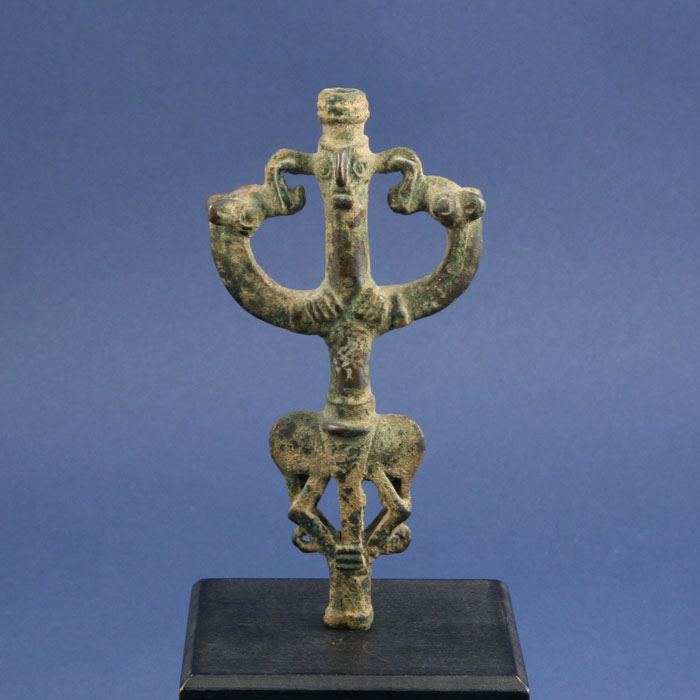
The label “Luristan bronzes” (see BRONZES OF LURISTAN) designates a series of decorated bronze objects in a specific local style dating from the Iron Age (ca. 1300/1250 to 700/650 BCE). These bronzes became known through large-scale illegal excavations starting in the late 1920s, but their cultural context and provenance remained uncertain for a long time and the label is often wrongfully used—usually for commercial reasons—for bronze objects from other regions or periods. The canonical Luristan bronzes belong to the geographical region of Luristan (present day provinces of Lorestān and Ilām), and include lost wax casts as well as sheet metal objects. Although few Luristan bronzes were found during controlled excavations, it is ascertained that the majority came from tombs, while one specific category (pins with decorated heads) have up to now only been found as ex-votos in a sanctuary. They mainly date to the Early Iron Age and are rare in Iron Age III (Overlaet, 2005, pp. 9-16).

The Luristan style is characterized by stylized human and animal forms, often combined to create fantastic creatures. Humans, birds, snakes, horses, bovid and feline species, and several species of goats are the main components. Vegetal elements are mostly used in a “tree of life” capacity, as border motifs or as filler motifs in between the principal iconography. The available evidence points to a chronological evolution from simple naturalistic themes to more complicated and fantastic creations.

There are several categories of objects that display the Luristan style. Horse gear includes horse-harness trappings and horse bits with decorative cheek pieces. Arms and equipment include spiked axe heads, adzes, daggers, swords, whetstone handles, and quiver plaques. Among the jewelry are rings, bracelets, pendants, and pins with cast or hammered sheet metal heads. An important series are the so-called “idols,” also labeled “finials” or “standards,” placed on tubular stands. Although Luristan bronzes are generally made of bronze, some are also bimetallic and consist of iron with cast-on bronze decorations (pins, bracelets, halberds, etc.). Exceptionally, there are a number of decorated iron artifacts that copy the cast bronze decorations. Since they belong to the same culture and display the same style, they should be included within the concept of Luristan bronzes (Moorey, 1991). (From Encyclopædia Iranica)


Saturday, 24 December 2011

LURISTAN BRONZE OBJECTS


The label “Luristan bronzes” (see BRONZES OF LURISTAN) designates a series of decorated bronze objects in a specific local style dating from the Iron Age (ca. 1300/1250 to 700/650 BCE). These bronzes became known through large-scale illegal excavations starting in the late 1920s, but their cultural context and provenance remained uncertain for a long time and the label is often wrongfully used—usually for commercial reasons—for bronze objects from other regions or periods. The canonical Luristan bronzes belong to the geographical region of Luristan (present day provinces of Lorestān and Ilām), and include lost wax casts as well as sheet metal objects. Although few Luristan bronzes were found during controlled excavations, it is ascertained that the majority came from tombs, while one specific category (pins with decorated heads) have up to now only been found as ex-votos in a sanctuary. They mainly date to the Early Iron Age and are rare in Iron Age III (Overlaet, 2005, pp. 9-16).

The Luristan style is characterized by stylized human and animal forms, often combined to create fantastic creatures. Humans, birds, snakes, horses, bovid and feline species, and several species of goats are the main components. Vegetal elements are mostly used in a “tree of life” capacity, as border motifs or as filler motifs in between the principal iconography. The available evidence points to a chronological evolution from simple naturalistic themes to more complicated and fantastic creations.

There are several categories of objects that display the Luristan style. Horse gear includes horse-harness trappings and horse bits with decorative cheek pieces. Arms and equipment include spiked axe heads, adzes, daggers, swords, whetstone handles, and quiver plaques. Among the jewelry are rings, bracelets, pendants, and pins with cast or hammered sheet metal heads. An important series are the so-called “idols,” also labeled “finials” or “standards,” placed on tubular stands. Although Luristan bronzes are generally made of bronze, some are also bimetallic and consist of iron with cast-on bronze decorations (pins, bracelets, halberds, etc.). Exceptionally, there are a number of decorated iron artifacts that copy the cast bronze decorations. Since they belong to the same culture and display the same style, they should be included within the concept of Luristan bronzes (Moorey, 1991). (From Encyclopædia Iranica)