Showing posts with label Iranian Philosophers. Show all posts

Sunday, 11 March 2012

"Rencontre avic Aramech Dusdar" by Ali Amini and Farhad Farhadi, 2000 (Farsi with French subtitles)

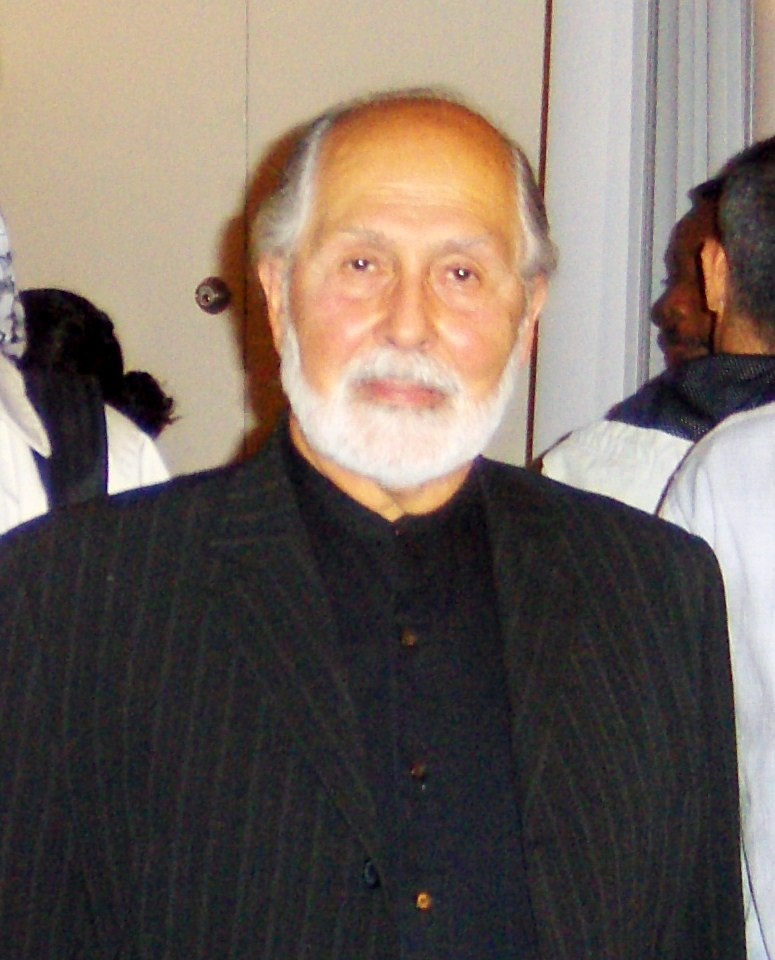
Aramesh Dusdar


Aramesh Dustdar (born in Tehran) is an Iranian philosopher, writer, scholar and a former philosophy lecturer at Tehran University.Dustdar received a PhD degree in philosophy from University of Bonn. He is known in Iran as a secular Heideggerian philosopher (in contrast to Reza Davari Ardakani who is a religious Heideggerian philosopher). (From Wikipedia)


"[Aramesh Dusdar] belongs to the same generation of Tehran's academic "philosophers" in the early 1970's, people like Shayegan, Davari, Enayat, Nasr and a few minor figures around them, who were thinking within the same problematic discourse that Ahmad Fardid (via Al-e-Ahmad) laid its parameters out: the destiny of our culture against the onslaught of Western civilization; questions of History (capital H), faith, modern science and technology and what lays ahead, our future in the world. Aramesh Dustdar was the black sheep of the gang, the antichrist among the gatekeepers of Hekmat-e-Elaahi.

Then something strange happened which is not dissimilar to Germany in the 30s. Amazing parallels! History took a grave turn and everybody got caught up in its tremors. We don't get in to that story but one immediate result was a moratorium on thinking, the kind which had just started.

Regardless of what we think of these individuals and the weight and caliber of their thinking (I happen to think the majority were ersatz-philosophers), we should grant them that they were the first group of post-Mashrootiat intellectuals who could be called "thinkers" or "philosophers." All the others before them were Adeebs, Mohaghgheghs, encyclopedists and Alems, and of course a mass of journalists that we can loosely call our modern intelligentsia.

But among that crew of thinkers, Aramesh Dustdar was the oddball; he did not have the nativist peasant attitude sporting a tassbih, clearing his throat with verses of Hafiz (or hooey from Sepehri) every step of the way, and he certainly was not a dilettante-tourist-philoshophe with Parisian accent searching Illuminations from the East. He was a true German mandarin of strong atheistic stripes, a heavy-weight. And he was bent to grapple with all those mystifications generally known as farhang-e Irani-Islami. Only one person before him had done something similar, a serious wake-up call, little understood up until even today: a man named Ali Esfanidari, otherwise known as Nima Youshij." (From "Demanding criticism" by Abdee Kalantari)


Sunday, 11 September 2011

"Government in Iran"-- An Interview with Ramin Jahanbegloo

Ramin Jahanbegloo and the Dalai Lama


Ramin Jahanbegloo is a well-known Iranian-Canadian philosopher. He received his B.A. and M.A. in Philosophy, History and Political Science and later his Ph.D. in Philosophy from the Sorbonne University. In 1993 he taught at the Academy of Philosophy in Tehran. He has been a researcher at the French Institute for Iranian Studies and a fellow at the Center for Middle Eastern Studies at Harvard University.

Ramin Jahanbegloo taught in the Department of Political Science at the University of Toronto from 1997-2001. He later served as the head of the Department of Contemporary Studies of the Cultural Research Centre in Tehran and, in 2006-07, was Rajni Kothari Professor of Democracy at the Centre for the Study of Developing Societies in New Delhi, India. In April 2006 Dr. Jahanbegloo was arrested in Tehran Airport charged with preparing a velvet revolution in Iran. He was placed in solitary confinement for four months and released on bail. He is presently a Professor of Political Science and a Research Fellow in the Centre for Ethics at University of Toronto and a board member of PEN Canada.

In October 2009 Jahanbegloo became the winner of the Peace Prize from the United Nations Association in Spain for his extensive academic works in promoting dialogue between cultures and his advocacy for non-violence. (From  Jahanbegloo/s website)


Tuesday, 6 September 2011

Abdolkarim Soroush: "Shi'ism in Need of Reform"


Dr. Abdolkarim Soroush


Abdolkarim Soroush (عبدالكريم سروش), born Hosein Haj Faraj Dabbagh (1945-; Persian: حسين حاج فرج دباغ), is an Iranian thinker, reformer, Rumi scholar and a former professor at the University of Tehran. He is arguably the most influential figure in religious intellectual movement in Iran. Professor Soroush is currently a visiting scholar at the University of Maryland in College Park, MD. He was also affiliated with other prestigious institutions, including Harvard, Princeton, Yale, Columbia, the Leiden based International Institute for the Study of Islam in the Modern World (ISIM) and the Wissenschaftskolleg in Berlin. Soroush idea's, founded on Relativism prompted both supporters and critics to compare his role in reforming Islam to that of Martin Luther in reforming Christianity. (From Wikipedia).


Sunday, 3 July 2011

Timothy Winter: The life and works of al-Ghazali

Al-Ghazâlî


Al-Ghazâlî (c.1055–1111) was one of the most prominent and influential philosophers, theologians, jurists, and mystics of Sunni Islam. He was active at a time when Sunni theology had just passed through its consolidation and entered a period of intense challenges from Shiite Ismâ’îlite theology and the Arabic tradition of Aristotelian philosophy (falsafa). Al-Ghazâlî understood the importance of falsafa and developed a complex response that rejected and condemned some of its teachings, while it also allowed him to accept and apply others. Al-Ghazâlî's critique of twenty positions of falsafa in his Incoherence of the Philosophers (Tahâfut al-falâsifa) is a significant landmark in the history of philosophy as it advances the nominalist critique of Aristotelian science developed later in 14th century Europe. On the Arabic and Muslim side al-Ghazâlî's acceptance of demonstration (apodeixis) led to a much more refined and precise discourse on epistemology and a flowering of Aristotelian logics and metaphysics. With al-Ghazâlî begins the successful introduction of Aristotelianism or rather Avicennism into Muslim theology. After a period of appropriation of the Greek sciences in the translation movement from Greek into Arabic and the writings of the falâsifa up to Avicenna (Ibn Sînâ, c.980–1037), philosophy and the Greek sciences were “naturalized” into the discourse of kalâm and Muslim theology (Sabra 1987). Al-Ghazâlî's approach to resolving apparent contradictions between reason and revelation was accepted by almost all later Muslim theologians and had, via the works of Averroes (Ibn Rushd, 1126–98) and Jewish authors a significant influence on Latin medieval thinking. (From Stanford Encyclopedia of Philosophy)


Timothy John "Tim" Winter (Shaykh Abdal Hakim Murad)


Timothy John "Tim" Winter (born 1960), also known as Shaykh Abdal Hakim Murad, is a British Muslim researcher, writer, columnist and teacher. His profile and work have attracted media coverage both in the Muslim World and the West. Conversant in both traditional Islamic scholarship and Western thought and civilization, Winter has made contributions on many Islamic topics. (From Wikipedia)  


Saturday, 25 June 2011

Dariush Shayegan Talks about the Golden Age of Iranian Culture and How to Revive it (Global Dialogue Prize 2009's Speech)

Dariush Shayegan


Dariush Shayegan (born in 1935 in Tehran) (Persian: داریوش شایگان) is one of Iran's prominent thinkers, cultural theorists and comparative philosophers.

Shayegan studied at Sorbonne University in Paris. He was a Professor of Sanskrit and Indian religions at Tehran University.

He wrote a novel "Land of Mirage" in French which won the ADELF award presented by the Association of French Authors on December 26, 2004. According to the Persian daily Aftab, Shayegan is well known in France for his books in the field of philosophy and mysticism.

Shayegan, who studied with Henry Corbin in Paris, also did many pioneering works on Persian mysticism and mystic poetry. He was a founding director of the Iranian Center for the Studies of Civilizations. In 1977, Shayegan initiated an international symposium on the "dialogue between civilizations," a concept that has been selectively appropriated by the former Iranian President Mohammad Khatami. In 2009 Shayegan was awarded the inaugural Global Dialogue Prize, an international award for "outstanding achievements in the advancement and application of intercultural value research", in recognition of his dialogical conception of cultural subjectivity.


Monday, 2 May 2011

Seyyed Hossein Nasr Talks to Dennis Wholey about Islam


Seyyed Hossein Nasr (Persian: سید حسین نصر) (born April 7, 1933 in Tehran) is an Iranian University Professor of Islamic studies at George Washington University, and a prominent Islamic philosopher. He is the author of many scholarly books and articles.

Nasr is a Muslim Persian philosopher and renowned scholar of comparative religion, a lifelong student and follower of Frithjof Schuon, and writes in the fields of Islamic esoterism, Sufism, philosophy of science, and metaphysics.

Nasr is the first Muslim to deliver the prestigious Gifford Lectures, and in year 2000, a volume was devoted to him in the Library of Living Philosophers.

Professor Nasr speaks and writes based on the doctrine and the viewpoints of the perennial philosophy on subjects such as philosophy, religion, spirituality, music, art, architecture, science, literature, civilizational dialogues, and the natural environment. He also wrote two books of poetry (namely Poems of the Way and The Pilgrimage of Life and the Wisdom of Rumi), and has been even described as a 'polymath'.

Nasr speaks Persian, English, French, German, Spanish and Arabic fluently. (From Wikipedia)

Watch the video here.