Showing posts with label Iranian Folk Music. Show all posts

Tuesday, 13 March 2012

"Rashid Khan"

Shojaoddoleh's Manor House in Ghoochan


"Rashid Khan" is an Iranian folk song from Ghoochan, located in northeast of Khorasn, Iran. In Ghoochan, the song is known as "Ghoochan Kharabeh" or "Ruined Ghoochan", but in the rest of Iran, it is usually referred to as "Rashid Khan." Here are two different performances of the song, Pari Zangeneh's "Rashid Khan" and a modern instrumental adaptation of the Khorasani classic by Shirin Delsooz.


Pari Zangeneh


Pari Zangeneh, an acclaimed Persian female vocalist, began her study of music in Iran at a very early age before continuing her studies in Italy, Germany, and Austria. Renowned for her unique opera-style music, Zangeneh’s beautiful music is both charming and soothing. Her musical portfolio is varied and complex. She has been given as much credit for generating interest in Persian folk music as for her solo performance of Beethoven’s Ninth Symphony with the Florida Symphonic Orchestra. Her voice has been heard around the globe: at the Palazzo Barbarini in Rome; the Kennedy Center in Washington D.C.; Lincoln Center in NYC; Herbst Theatre in San Francisco; Harvard University in Cambridge, Massachusetts; Salmino, Paris; Hercules Hall, Munich; Wilshire Ebell Theatre, Los Angeles; to name but a few. She is the recipient of many international awards for her magnificent performances, including the First Medal of Work, the International Gold Medal for Voice, and the title of Ambassador of Good Will.

In 1971, unfortunately, Ms. Zangeneh lost her eyesight in an automobile accident. This incident did not diminish her enthusiasm and passion for life, nor her pursuit of excellence. In addition to her musical performances she has studied and researched the folk music of many countries, and has preserved a wealth of melodious songs and stories. She has authored several books all to critical acclaim. All her writings are available in Braille. (From Encyclopædia Iranica)


Shirin Delsooz


Shirin Delsooz is a Persian-Canadian musician based in Montreal whose influences range from alternative to traditional music. Her latest EP features her singing, playing mandolin and guitar, and also features musicians she met in the Irish and Quebecois traditional music scene.Shirin combines her Persian heritage and inspirations ranging from Celtic, Quebecois and Bluegrass genres into her songs.

A recent trip to Iran opened her eyes to a genre of Persian gypsy music. Her mind has been made since, her next music project will incorporate their charming accordians and upbeat percussive drums. (From CBC)


Thursday, 17 November 2011

Sima Bina

Sima Bina


A lifetime of dedicated work on Persian folk music has made Sima Bina a legendary characterin the history of Iranian music.

Her singing careerbegins at the age of 10 with a popular radio program for children. Her musicaltalent drives her into taking music more seriously. She studied and perfectedPersian classical music with some of the great masters, and when she attainedthe artistic maturity to decide on her musical path, she chose to devote herlife to reviving the folk music of her homeland.

The fascination for Iranian folk music and songs had been ignited by her father, her first music teacherand songwriter. But, ironically its development into a lifetime commitment coincidedwith a historical time when her musical activities were banned in her homeland. Sima, however, maintains that it was ablessing in disguise. She says, “Whenyou can’t perform, people are taken away from you. So your focus shifts moreseriously to what you search for in life.”

In more than thirtyyears, by traveling to some of the most remote places all over Iran, Sima Bina collectedan assortment of almost forgotten folk songs and melodies. By recomposing the folksongsand tunes for her performance, Sima has formed her own distinctive style in Iranianfolk music.

Since 1993 Sima Binahas accepted invitations to perform her music worldwide in prestigiousfestivals and organized concerts. The worldwide recognition her music receivestoday is the materialization of over forty years of her devotion to Iranianfolk music.

While pursuingIranian folksongs, Sima often came across a variety of ethnic lullabies whichshe added to her collected works. This collection finally led to her book, IranianLullabies in 2009. In this book, SimaBina not only shares her findings, her perception, the scores and visualexpression of the selected lullabies with mothers, she also presents fortyoriginal Iranian lullabies in four CDs in which her vocal is sometimes blended withthe singing of the mothers who had song the lullabies to her in different partsof Iran.

Sima continues topresent Iranian folksongs in World Music festivals and concerts, while furtherexploring hidden folksongs in the vast plateau of Iran. She is currently working on Balouch music andmaintains documenting her findings of Iranian folksongs and music. (Sima Bina's Official Website)


Sunday, 18 September 2011

Heydar Babaya Salam

Heydar Babaya Salam (Azerbaijani: Heydər Babaya Salam, Azeri: حيدر بابايه سلام) is the best known poetical work by Mohammad Hossein Shahriar (Shahriyar), a famous Iranian poet. Published in 1954, it is about Shahriyar's childhood and his memories of his village Khoshginab near Tabriz. Heydar Baba is the name of a mountain overlooking the village.

In Heydar Babaya Salam Sharyar shows a nostalgia for Azerbaijani-Iranian simple village life before modernisation. (From Wikipedia)


Seyyed Mohammad Hossein Behjat-Tabrizi


Heydar Babaya Salam's opening lines in English: (From shehriyar)

Hail to Haydar-Baba

1-
Haydar-Baba when it thunders,
Floods rush down
Girls stand back and watch,

I hail your glory and your people,
May you remember our names too.

2-
When your partridges take flight,
When the rabbits hop out of the bushes,
When your gardens have burst into blossoms,

May you remember our name too,
And make our depressed hearts happy.

3-
When Nowruz gales uproot garden shelters!
And Nowruz flowers and snow drops blossom!
When the clouds wring out their clothes!

Greetings to those who remember us,
Let our sighs turn into mountains.

4-
Haydar-Baba may the sun warm your back,
Make your smiles and your springs shed tears,
Your children collect a bunch of flowers,

Send it with the coming wind towards us,
Perhaps my sleeping fortune would awaken!

5-
Haydar-Baba may you be fortunate!
Be surrounded with springs and orchards!
May you live long after us!

The world is paved with events, deaths and losses!
This world has long been childless and an orphan!

6-
Haydar-Baba my way differed from yours,
Life passed, I could not come until late!
I could not learn what happened to your beautiful ones,

Did not know there were perilous paths,
Losses, separations and death.

7-
Haydar-Baba good sons are faithful,
Life passes,regrets are wasteful,
Disloyal sons won't live long,

Believe me we have never forgotten you,
Forgive us if we failed to see you.

8-
Haydar-Baba when Mirazhdar calls for pilgrimage,
And the village is filled with busy noise,
While Ashig Rustam played his saz,

Do you remember how with such enthusiasm we used to run?
Flapping like winged birds to fly?

9-
Ashig apples from Shangulava village,
Staying there as a guest now and then,
Throwing stones at the apple and quince trees,

All have stayed in my memory like sweet dreams!
Have left traces in my soul and whole being!

10-
Haydar-Baba the geese of Guri lake,
The musical melody of the wind at twisted highways,
The summer and autumn seasons of the village,

Are like moving pictures in front of my eyes!
I sit and watch them within myself!


Gholam-Reza Sabri-Tabrizi


Translated by Dr. Gholam-Reza Sabri-Tabrizi
University of Edinburgh and University of Baku
London, Febuary 29,2002.


Tuesday, 12 July 2011

Bushehri Music and Dance in Louvre Museum: A Performance by Shanbehzadeh Ensemble


Persian Gulf Coast in Bushehr


Bushehr (Persian:بوشهر /Būšehr/), pop. 165,377 (in 2005), is a city on the southwestern coast of Iran, on the Persian Gulf. It is the chief seaport of the country and the administrative centre of Bushehr province. Its location is 28° 59' N, 50° 49' E, about 1,281 kilometres (796 mi) south of Tehran. The local climate is hot and humid.  (From Wikipedia)


Shanbehzadeh Ensemble

Shanbehzadeh Ensemble (Persian: گروه شنبه زاده) is an Iranian folk band, formed in Bushehr in 1990. The band offers a rare aspect of the traditional music and dance of the Persian Gulf, more specially of the province of Bushehr, south of Iran and bordering Persian gulf.

The principal instruments of the ensemble are the neyanbān (bagpipe), neydjofti (flute), dammām (drum), zarbetempo (percussion), traditional flute, senj (cymbal) and boogh (a goat’s horn). The Ensemble has delighted audience in Iran, Europe and North-America. (From Wikipedia)


Friday, 17 June 2011

Gholam Ali Pouratayee, Khorasan Music

Maestro Gholam Ali Pouratayee is one of the biggest names in the history of traditional Khorasani music. He lives in Torbat Jam.


Gholam Ali Pouratayee

Greater Khorasan or Ancient Khorasan (Persian: خراسان کهن یا خراسان بزرگ) (also written Khurasan) is a historical region spanning what are now northeastern Iran, most of Afghanistan, and the southern parts of Turkmenistan, Uzbekistan and Tajikstan. The name "Khorasan" is derived from Middle Persian khor (meaning "sun") and asan (or ayan literally meaning "to come" or "coming"), hence meaning "land where the sun rises". The Persian word Khāvar-zamīn (Persian: خاور زمین), meaning "the eastern land", has also been used as an equivalent term.

Khorasan in its proper sense comprised principally the cities of Nishapur and Tus (now in Iran), Balkh and Herat (now in Afghanistan), Merv (now in Turkmenistan), and Samarqand and Bukhara (now in Uzbekistan). However, the name has been used in the past to cover a larger region that encompassed most of Transoxiana and Soghdiana in the north, extended westward to the Caspian Sea, southward to include the Sistan desert and eastward to the Hindu Kush mountains in Afghanistan. Arab geographers even spoke of its extending to the boundaries of ancient India, possibly as far as the Indus valley, in what is now Pakistan. Sources from the 14th to the 16th century report that Kandahar, Ghazni and Kabul in Afghanistan formed the frontier region between Khorasan and Hindustan.

In the Islamic period, Persian Iraq and Khorasan were the two important territories. The boundary between these two was the region surrounding the cities of Gurgan and Damghan. In particular, the Ghaznavids, Seljuqs and Timurids divided their empires into Iraqi and Khorasani regions. The adjective Greater is added these days to distinguish the historical region from the Khorasan province of Iran, which roughly encompasses the western half of the historical Khorasan. It is also used to indicate that ancient Khorasan encompassed a loose collection of territories individually known by other popular names, such as Bactria, Khwarezmia, Sogdiana, Transoxiana, and Sistan or Arachosia.

Torbat-e Jām is an ancient city in the Razavi Khorasan state in north-eastern Iran. It is about 160 kilometres (99 miles) southwest of Mashhad, about 60 kilometres (35 miles) north of Taybad, and about 40 kilometres (25 miles) west of the Afghanistan border. There are many ancient places there, like the mazar (tomb) of Sheikh Ahmad Jami and Prince Ghasem Anvar. It includes many villages, such as Bezd, Mahmoodabad, Nilshahr. (From Wikipedia)

Here is a vocal performance by Gholam Ali Pouratayee accompanied by his legendary dutar.


Sunday, 22 May 2011

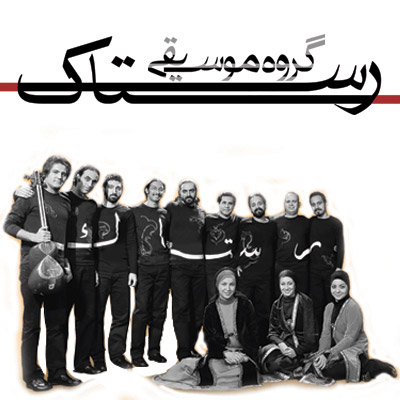
Rastak; "Baroon"

Rastak is a new ensemble for contemporary Persian folk music. It was formed as an experimental music group in 1997. The group seeks to collect, record and interpret traditional Persian folk music for a global audience. (From Rastak"s Facebook page)  


Wednesday, 18 May 2011

Luri Music


A Lur

Lurs, like most Iranians, are a mixture of indigenous inhabitants of the Zagros mountains-(Sumerians, Mesopotamians and Elamites) and Iranian-speaking peoples. The Lurs constitute part of the Southwestern branch of the Iranian peoples and part of the Indo-Iranian linguistic group, spread across the Iranian plateau, stretching from the Hindu Kush to central Anatolia and from Central Asia to the Persian Gulf - a region that is sometimes termed Greater Iran. Their language (called Luri or Lurish language ) is closely related to Persian, and there are two distinct dialects of this language. "Lur-e-Bozourg" (Greater Lur), which is spoken by the Bakhtiaris, and "Lur-e-Kuchik" (Lesser Lur), spoken by the Lurs themselves. People in Borujerd speak in Borujerdi Dialect, a local Lori Persian dialect which is extracted from Luri. Northwest of Lorestan Province is dominated by Laki speakers. The overwhelming majority of Lurs are Shia Muslims. In Khuzestan, Lur tribes are primarily concentrated in the northern part of the province, while in Ilam they are mainly in the southern region.

Prior to the 20th century the majority of Lurs were nomadic herders, with an urban minority residing in the city of Khorramabad. There were several attempts by the Pahlavi governments to forcibly settle the nomadic segment of the Lur population. Under Reza Shah, these campaigns tended to be unsuccessful. The last Shah of Iran, Mohammad Reza Pahlavi, used less forceful methods along with economic incentives, which met with greater, though not complete, success. By the mid-1980s the vast majority of Lurs had been settled in towns and villages throughout the province, or had migrated to the major urban centres.

A number of nomadic Lur tribes continue to exist in the province. Amongst the settled urban populace the authority of tribal elders still remains a strong influence, though not as dominant as it is amongst the nomads. As in Bakhtiari Lurs and Kurdish societies, Northern Lur women have had much greater freedoms than women in other Iranian groups.


Wednesday, 20 April 2011

The Kamkars – The Nobel Peace Prize Concert


The Kamkars

The Kamkars (Kurdish: Kamkaran کامکاران, Persian: کامکارها ), a Kurdish family of seven brothers and a sister, all from the city of Sanandaj, are one of the leading musical ensembles in Iran today. Their repertoire ranges from the vast array of traditional Kurdish and Persian music with its poignant, entrancing melodies and uplifting high energy rhythms to the classical Kurdish and Persian classical music of Iran. The repertoire of Kurdish music is richly diverse and deeply-rooted in the ancient history and culture of its proud and passionate people. It speaks of epic tales and wars, romantic love, and recounts ancient myths and stories of national and religious heroes, some of which date back to thousands of years to the time of the ancient Medes (the ancestors of the Kurds).”

The group has performed numerous concerts around the world, including their performance at the 2003 Nobel Peace Prize ceremony honoring Shirin Ebadi. (From Wikipedia)