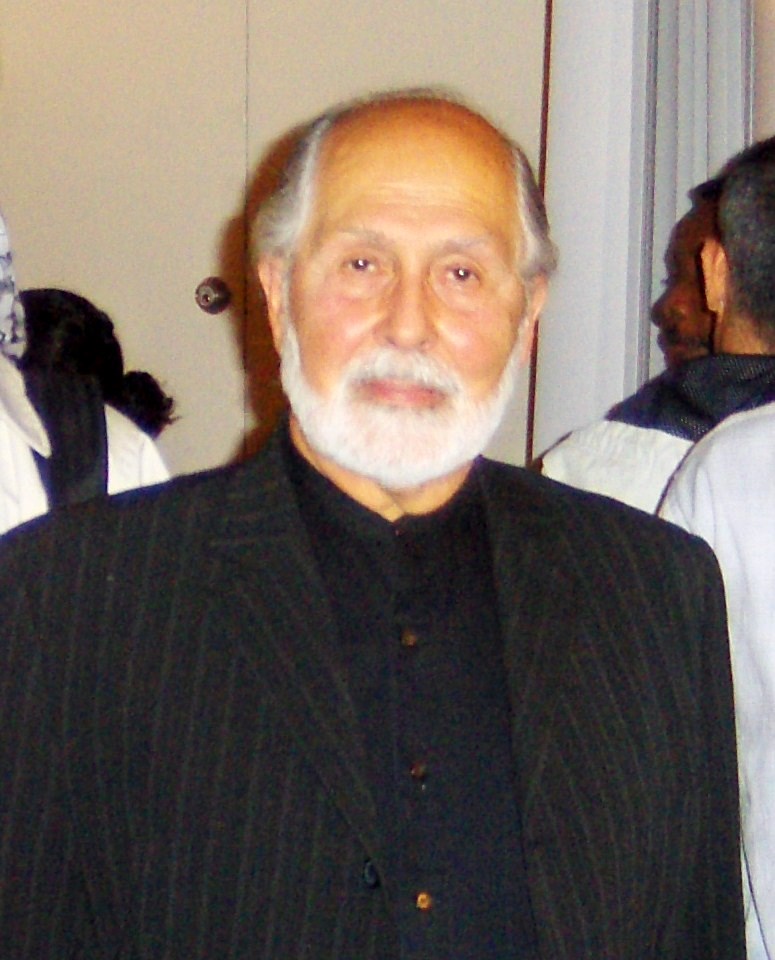
Ostad Ali Asghar Bahari (1905 – June 10, 1995) was an Iranian musician and kamancheh player. He was born in Tehran and started his music lessons under his grand father Mohammad Taghi Khan, who was a kamancheh player as well. After three years, his father sent him to his uncles to learn more advanced techniques. Asghar had three uncles (all mother's brothers): Akbar, Reza and hassan. They were all famous kamancheh players. His first major success was with Ebrahim Khan Mansouri's Orchestra at the age of 18. He started his own music school in Mashhad, then he moved back to Tehran and became an kamancheh instructor in Honarestan under Ruhollah Khaleghi. He played with most famous Iranian musician such as Hossein Tehrani, Ahmad Ebadi, and Abolhasan Saba. He also was a professor of music in Tehran University for a few years. He toured France, Belgium, Germany' Italy' England and the United States. He died in Tehran. (From Wikipedia)
Sunday, 8 May 2011
Ali Asghar Bahari
Ostad Ali Asghar Bahari (1905 – June 10, 1995) was an Iranian musician and kamancheh player. He was born in Tehran and started his music lessons under his grand father Mohammad Taghi Khan, who was a kamancheh player as well. After three years, his father sent him to his uncles to learn more advanced techniques. Asghar had three uncles (all mother's brothers): Akbar, Reza and hassan. They were all famous kamancheh players. His first major success was with Ebrahim Khan Mansouri's Orchestra at the age of 18. He started his own music school in Mashhad, then he moved back to Tehran and became an kamancheh instructor in Honarestan under Ruhollah Khaleghi. He played with most famous Iranian musician such as Hossein Tehrani, Ahmad Ebadi, and Abolhasan Saba. He also was a professor of music in Tehran University for a few years. He toured France, Belgium, Germany' Italy' England and the United States. He died in Tehran. (From Wikipedia)
Friday, 6 May 2011
Iran, World War II (some British newsreels)
British Occupation Of Iran
Empire and Soviet Armies Meet in Iran
New Rule Begins In Iran
Italian And German Troops Rounded Up In Iran
Tuesday, 3 May 2011
The Radif
Radif (Persian: ردیف, meaning order in Persian) is a collection of many old melodic figures preserved through many generations by oral tradition. It organizes the melodies in a number of different tonal spaces called Dastgah. The traditional music of Iran is based on the Radif, which is a collection of old melodies that have been handed down by the masters to the students through the generations. Over time, each master's own interpretation has shaped and added new melodies to this collection, which may bear the master's name.
The preservation of these melodies greatly depended on each successive generation's memory and mastery, since the interpretive origin of this music was expressed only through the oral tradition.
To truly learn and absorb the essence of the Radif, many years of repetition and practice are required. A master of the Radif must internalize the Radif so completely to be able to perform any part of it at any given time.
The Radif contains several different dastgahs which are distinguished from each other by their relationship of note intervals and the form of the movement of the melodies within them. A dastgah portrays a specific sonic space. A dastgah may contain approximately from 10 to 30 goushehs (melodies). The principal goushehs of the dastgah specify the different scales within that dastgah. The note, upon which the gousheh is based and often is the center of the gousheh, is called the shahed. The shahed moves when we modulate between principal goushehs, and this movement creates a new sonic space. Rhythm in these melodies takes three different forms: symmetric, asymmetric (lang), and free form. The rhythm is greatly influenced by the rhythm and meter of the Persian poetry. The instrumental and vocal Radif are different from the rhythmical point of view; however, their melodic structures are the same.
The preservation of these melodies greatly depended on each successive generation's memory and mastery, since the interpretive origin of this music was expressed only through the oral tradition.
To truly learn and absorb the essence of the Radif, many years of repetition and practice are required. A master of the Radif must internalize the Radif so completely to be able to perform any part of it at any given time.
The Radif contains several different dastgahs which are distinguished from each other by their relationship of note intervals and the form of the movement of the melodies within them. A dastgah portrays a specific sonic space. A dastgah may contain approximately from 10 to 30 goushehs (melodies). The principal goushehs of the dastgah specify the different scales within that dastgah. The note, upon which the gousheh is based and often is the center of the gousheh, is called the shahed. The shahed moves when we modulate between principal goushehs, and this movement creates a new sonic space. Rhythm in these melodies takes three different forms: symmetric, asymmetric (lang), and free form. The rhythm is greatly influenced by the rhythm and meter of the Persian poetry. The instrumental and vocal Radif are different from the rhythmical point of view; however, their melodic structures are the same.
Monday, 2 May 2011
Seyyed Hossein Nasr Talks to Dennis Wholey about Islam
Nasr is a Muslim Persian philosopher and renowned scholar of comparative religion, a lifelong student and follower of Frithjof Schuon, and writes in the fields of Islamic esoterism, Sufism, philosophy of science, and metaphysics.
Nasr is the first Muslim to deliver the prestigious Gifford Lectures, and in year 2000, a volume was devoted to him in the Library of Living Philosophers.
Professor Nasr speaks and writes based on the doctrine and the viewpoints of the perennial philosophy on subjects such as philosophy, religion, spirituality, music, art, architecture, science, literature, civilizational dialogues, and the natural environment. He also wrote two books of poetry (namely Poems of the Way and The Pilgrimage of Life and the Wisdom of Rumi), and has been even described as a 'polymath'.
Nasr speaks Persian, English, French, German, Spanish and Arabic fluently. (From Wikipedia)
Watch the video here.
Subscribe to:
Posts (Atom)